

The most comprehensive guide in French on SEO writing.
If you want to transform your website’s performance,
Create effective content that gets seen, read, and converts,
Have a practical checklist for your SEO writing —
You’re going to love this guide!
Keep reading…
What Is SEO Writing?
First of all, it’s essential to understand what SEO writing truly is.
SEO writing (Search Engine Optimization) involves creating content designed to rank favorably in search engine results. It’s not just about inserting keywords; it’s about structuring and crafting content in a way that meets users’ specific needs while following search engine guidelines.
The goal is to make your content easily understandable for search engines and valuable for readers — striking the right balance between technical optimization and writing quality.
Why Is It Important?
In a digital world where content is king, SEO writing is crucial to ensuring your website’s online visibility.
Search engine–optimized content increases your chances of appearing among the top search results, leading to higher organic traffic. The more visible your content is, the greater your chances of attracting and engaging a targeted audience. In fact, a recent survey of over a thousand bloggers revealed that SEO was their third most important source of traffic, right after email marketing.”
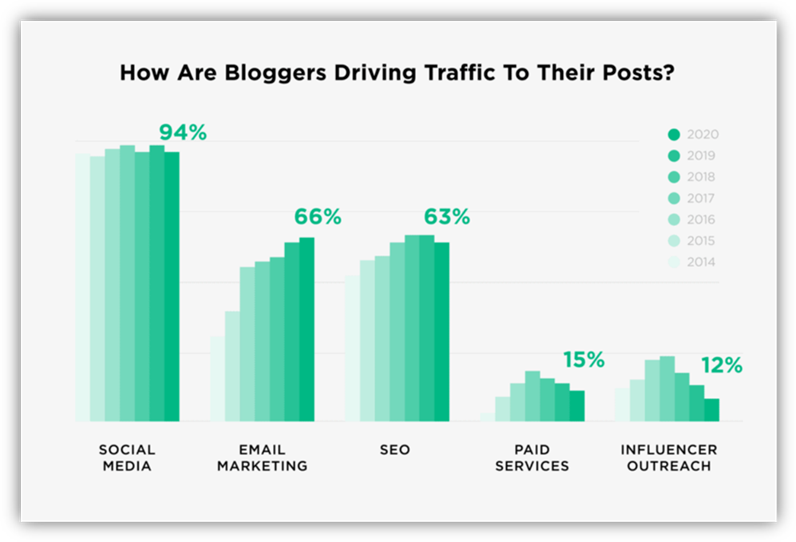
Source: Backlinko.com
The following sections will equip you with concrete strategies and proven tips to turn your writing into a traffic magnet. Whether you’re a beginner or an experienced writer, this information will revolutionize your approach and help you dominate the SERPs (Search Engine Results Pages).
Let’s dive right in!
Define Your Target Audience
Identifying who your content is meant for is the first step after choosing your topic. Whether your readers are professional sports enthusiasts living in France or Belgian entrepreneurs interested in digital marketing — you need to know it.
This phase is crucial, especially for:
- Choosing the right words to use in your content
- Setting up keyword research tools properly
Find Relevant Keywords
Now that you’ve defined your target audience, the next step is to find relevant keywords. Keywords are the words or phrases your target audience uses when performing searches. You need to know them if you want Google to see your content as the ideal answer to your audience’s queries.
To uncover the most relevant keywords, you can take several approaches, such as:
- Explore Google suggestions:
Start by typing basic terms into Google and note the autocomplete suggestions that appear. These are based on frequent searches and can give you valuable insight into the terms your audience actually uses. - Use keyword research tools (free or paid):
Keyword research tools are an essential method for identifying the most effective terms to target in your SEO content. These tools help you analyze not only keyword popularity and competition but also their relevance to your niche.
A highly effective tool, often recommended in the “Free Tools” category, is Google Keyword Planner.”
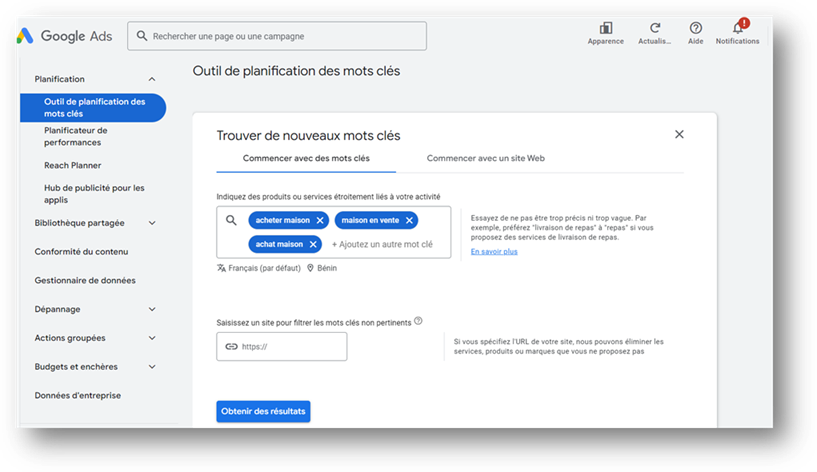
Once inside the tool, enter all the relevant keywords for the query you want to answer. Make sure to select the correct geographic region (that of your target audience).
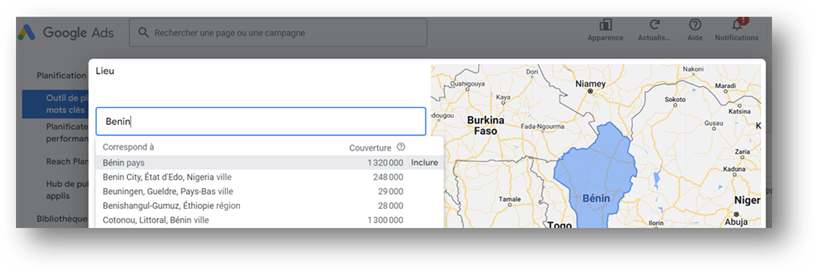
Then run the search. It’s as simple as that.
You’ll get a more or less long list of related keywords along with their monthly search volumes.
You might think that the ideal approach is to choose a keyword with a high monthly volume to ensure traffic. This is not always a good idea!
It’s often more advantageous to select keywords with a reasonable search volume and competition that you can realistically manage. The relevance of these choices will largely depend on your site’s authority and its ability to rank effectively in your niche.
You’ve chosen a query to target. What’s next?
Determine the Search Intent
The type of content you create for SEO is defined by the hidden intent behind the user’s search. Whether it’s a comparison, a product page, or a blog article, you must create content that aligns with the search intent to best meet your readers’ expectations.
The following table presents the four types of search intent and their associated content types:
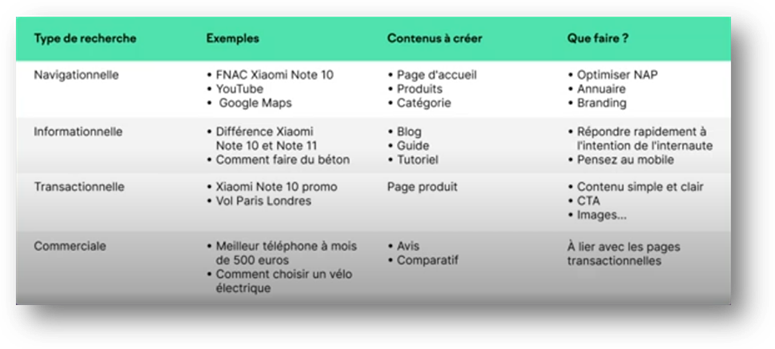
Source: Semrush YouTube Channel
To determine the type of content you should create, you have several options:
- Understand the hidden intent behind the query yourself.
- Analyze the SERPs for the targeted query. The goal is to discover directly what type of content Google chooses to display in response to a specific query.
- Use paid tools like Semrush, which specify the search intent for a specific keyword.
However, remember this: “You should create your content not based on what the user will actually type into Google, but on how Google will interpret that query — and thus the informational need associated with the search intent it assigns to that query.”
Once you know your audience, their query, and the informational need behind it, you may want to reflect on your initial objective. Determine whether creating a specific type of content will help you achieve your marketing goals. In some cases, it may be better to choose other keywords to stay aligned with your SEO content objectives.
Great! After that, you can move on to the core work.
Write Unique and Quality Content
Data Collection
To create content that is both unique and high-quality, providing all the necessary answers to users on a given topic, there are generally two approaches: have expertise in the field or conduct thorough research (information gathering).
The second approach involves accumulating all the information and knowledge needed to provide an appropriate response to the reader. Here are some steps and rules to follow:
- Identify and study as many reliable sources related to your chosen topic as possible. This will provide inspiration and help you identify areas where you can stand out by offering unique insights.
- Be careful about the origin and accuracy of your sources to ensure the information is correct, useful, and high-quality.
- Remember that for any information already available elsewhere that you want to include, you must rewrite it in your own tone, words, and examples. This will help you stand out and enrich your SEO content.
Once you have identified all the information that would be useful to your readers on the topic — important points, details, etc. — establish the structure of your content.
Structure Your Content with Hn Tags
In SEO writing, structuring content has advantages for both readers and search engines.
Nothing complicated — just follow this pattern:
- Use H1 for the main title of the content,
- H2 for subtitles or major sections,
- H3 for points addressed within each section,
- And so on…
Logical, right?
However, make sure not to go beyond H6.
Once your structure is set, write your main body text. Only after that can you move to the next phase.
Write the Introduction and Conclusion
It’s recommended to write the introduction and conclusion after completing the main body. These two sections serve specific purposes, and skilled writers pay special attention to them.
In the introduction, it’s crucial to immediately capture the reader’s interest, make them understand they are in the right place, and show that they will find the answers they are looking for in your content. The first few lines determine whether a new visitor will stay on your page.
The conclusion’s ultimate goal is to drive readers to take action. Typically, it should:
- Offer a brief summary, then
- Include a call to action (CTA), such as: “What do you think of this guide? Maybe you noticed something we missed. Let me know by leaving a comment below.”
At this point, you have complete content that answers your reader’s concern. But unfortunately, this alone is not enough to achieve good results!
With thousands of websites online, your goal must be to clearly indicate your topic to Google and send the right signals for better ranking.”
Perform Semantic Optimization of Your Content
Semantic optimization of content is a crucial step if you want to achieve good SEO results. It involves various techniques used to enrich the semantics of your content, ensuring that search engines understand and index it correctly. Here are some best practices to follow:
- Optimize content around the chosen keyword: Writing SEO-optimized content does not mean repeating the same keyword endlessly. On the contrary, to ensure pleasant readability and effective interpretation by search engine bots, it’s better to diversify your vocabulary by exploring the full lexical and semantic field related to the topic.
- Include the main keyword in the URL, title tag (H1), introduction, and conclusion, maintaining a density of around 2% throughout the content (i.e., two appearances of the main keyword per 100 words).
- Integrate synonyms of the main keyword in subtitle tags (H2, H3…).
To ensure you adequately cover the semantic field of your target keyword, use semantic SEO optimization tools such as YourText Guru, 1.fr, or GPT-4, the AI model developed by OpenAI.
Pay Attention to Form
Remember, competition is increasingly fierce on the web. Users’ attention is very precious. You must do everything to make them want to engage further with your content. Keep in mind that “form should always serve content.”
To make your content attractive, easy to navigate, and easy to understand, pay attention to the following:
- Use varied vocabulary: Avoid repetition, reused phrases, and redundant structures. Use synonyms to enrich your text.
- Use clear and accessible language: Ultimately, humans sell to other humans, not robots. Strive to be as simple, clear, and human as possible in your writing. Use personal pronouns whenever possible (especially “you”).
- Use bullet points: Well-structured content that is easy to read is ideal. Bullet lists should contain at least three elements and no more than seven. Avoid lists of two elements and do not place two bullet lists under the same H2 title.
- Include visual and/or video media: Adding images or videos provides several advantages. They illustrate textual content for better understanding, provide additional explanations, and make long content more enjoyable and easier to consume.
However, don’t just add media — optimize it for SEO as well. Always fill in the title and alt fields of your visual content using relevant keywords.
Edit Your SEO Content
Keep these points in mind to produce expert-level content:
- If removing a word or sentence doesn’t change the idea or clarity, consider deleting it.
- Use short sentences and short paragraphs.
- Favor the active voice.
Imagine you’ve followed all the previous steps and now have quality, polished content that addresses the reader’s concern. Yet, it still needs clicks.
If you’ve ever searched on a search engine, you know that everything starts with the SERPs. After a user enters a query, the search engine returns multiple results. Often, users decide whether to click on a result based on the preview shown.
As the saying goes, first impressions matter. You need to optimize them to encourage readers to click on your result.
Optimize Metadata and Your Content URL
These elements are the only things users see from your content in the search results. Optimizing them is crucial to achieving a high Click-Through Rate (CTR), which Google closely monitors and which affects your SEO ranking.
Here are some proven tips to optimize:
Title
- Add a number to your title tag: Numbers attract attention. When appropriate, include numbers in your titles to improve results. Examples:
- “How a PhD Student Lost 8 Kilograms”
- “7 Proven Strategies for…”
- Use brackets and parentheses: These add context and draw attention. Examples:
- [Infographic]
- [Video]
- (Recent Case Study)
- (New Research)
- (Quick)
- Include the current year (optional): Many users search with queries like “Keyword + Year.” Including the year can help show your content is up to date.
- Keep it short
Meta Description
Use this proven formula for a clickable meta description:
“Here is a [content preview]. Learn how [specific benefit] with this [description of your content].”
Do not exceed 140 characters; otherwise, Google may truncate it.
URL
Use short, keyword-rich URLs.
Short URLs are more clickable. For example:
http://example.com/short-url

And include your keyword in the URL, e.g., if the keyword is “house for sale.”
Go Further with SEO Optimization: Links and Internal Linking
Add internal links:
Think of your readers as explorers navigating your site. Internal links provide clear paths to other relevant sections, improving user experience and strengthening your site’s internal linking structure, which is crucial for SEO. Ensure the links are natural and contextually relevant.
Add external links:
External links are equally important. Linking to high-authority sites can increase your content’s credibility and provide added value to your readers. It also signals to search engines that your content is well-researched and connected to reliable sources. Make sure external links open in a new tab to keep visitors on your site.
Promote Your Content
Once published, don’t stop there. Use social media, newsletters, and other platforms to promote your articles. This boosts visibility and traffic, which is essential for SEO. Encourage engagement by inviting readers to comment or share your content.
Analyze Your SEO Writing Performance
Finally, set up analytics tools to track content performance. Metrics like organic traffic, time on page, and conversion rates will help you understand what works and what needs improvement. These insights are invaluable for refining your content strategy and optimizing SEO effectiveness over the long term.
By integrating these practices into your content strategy, you can not only improve your site’s search engine ranking but also offer a rich and informative experience to your readers. What other tips would you recommend for creating high-quality SEO content? Share them in the comments — we’d love to hear about your experiences and suggestions
